Frank Lloyd Wright
Widely considered the greatest American architect of the 20th century. Student of Louis Sullivan, inventor of the Prairie style, designer of Fallingwater and the Guggenheim.
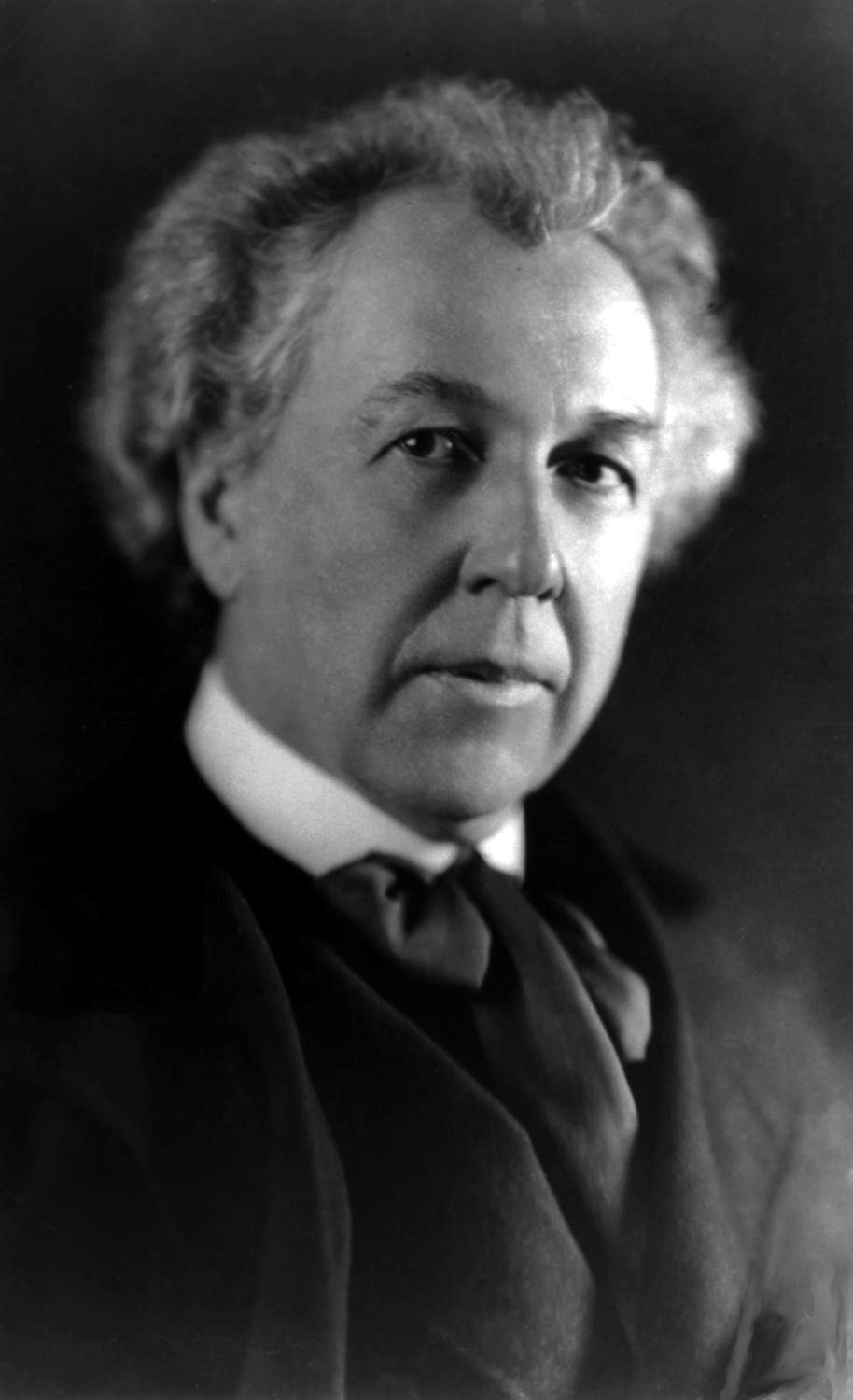
Frank Lloyd Wright was born on 8 June 1867 in Richland Center, Wisconsin, and died in Phoenix, Arizona on 9 April 1959 — aged 91, after a career that spanned seven decades and reshaped the way the world thinks about architecture.
From draftsman to Lieber Meister’s student
In 1887, a 20-year-old Wright took a train from Wisconsin to Chicago and walked into the office of Adler & Sullivan, the firm that was rewriting what a tall building could be. Louis Sullivan took him on as a draftsman. Over six years, Wright became Sullivan’s indispensable assistant on residential commissions while Sullivan focused on the skyscrapers that were making him famous.
For the rest of his life Wright called Sullivan Lieber Meister — “dear master”. Everything Wright did afterwards, in his own telling, traced back to what he learned at that firm.
An architecture of place
After leaving Sullivan in 1893, Wright opened his own practice in Oak Park, Illinois. He spent the next decade inventing the Prairie style: low, horizontal houses that hugged the flat midwestern landscape, with overhanging eaves, open plans, and built-in furniture. The Robie House in Chicago (1909) is the canonical example.
Wright believed architecture should grow out of its site like a plant grows out of soil. He called this organic architecture. The most famous result is Fallingwater (1937), a house cantilevered over a waterfall in rural Pennsylvania — perhaps the most photographed house ever built.
The mile-high dream
Wright was not primarily a skyscraper architect — he distrusted dense cities and preferred the horizontal house. But he was endlessly fascinated by what tall buildings could be. In 1956 he unveiled The Illinois: a one-mile-high, 528-storey tower for Chicago. It was never built. Sixty-seven years later, the world’s tallest building still stands at just over half a mile.
Of his built tall buildings, the most beloved is Price Tower in Bartlesville, Oklahoma (1956) — Wright’s only realised “tree-like” skyscraper, with a central core and cantilevered floors.
Selected works
Solomon R. Guggenheim Museum
New York City, 1959
The spiral concrete ramp that Wright spent 16 years designing — completed six months after his death. One of the most radical museum buildings ever made.
Price Tower
Bartlesville, Oklahoma, 1956
Wright’s only realised skyscraper. A “tree-like” tower with a central concrete core and floors cantilevered outward — an idea he had been refining since 1929.
Johnson Wax Headquarters
Racine, Wisconsin, 1939
The great open work-room with its dendriform “lily-pad” columns — one of the most beautiful interior spaces of the 20th century. Later joined by Wright’s 1950 research tower.
The Rookery (lobby)
Chicago, 1905 remodelling
Wright redesigned the famous interior light court of Burnham & Root’s 1888 office building — turning a Victorian iron skeleton into one of Chicago’s most photographed interior spaces.
The Illinois
Chicago (unbuilt, 1956)
Wright’s mile-high vision: 528 storeys, a tapering tripod, atomic-powered elevators. The tallest building ever proposed — six decades later still taller than anything humans have built.
Larkin Administration Building
Buffalo (1904, demolished 1950)
An early masterpiece — a sealed, climate-controlled office tower with built-in furniture and the world’s first air-conditioned office space. Demolished half a century before anyone realised what had been lost.
Why we mention him on Skyscraper Day
Sullivan invented the language of the tall building; Wright took the lessons from his old Lieber Meister and applied them to everything else. The two of them are inseparable. You cannot tell the story of one without the other — and you cannot tell the story of modern architecture without telling theirs.
Want to dive deeper into the world of tall buildings?
SKYDB is a free, community-driven database of skyscrapers and high-rise buildings worldwide. Create your free account — explore, follow, and contribute.
Join SKYDB →